
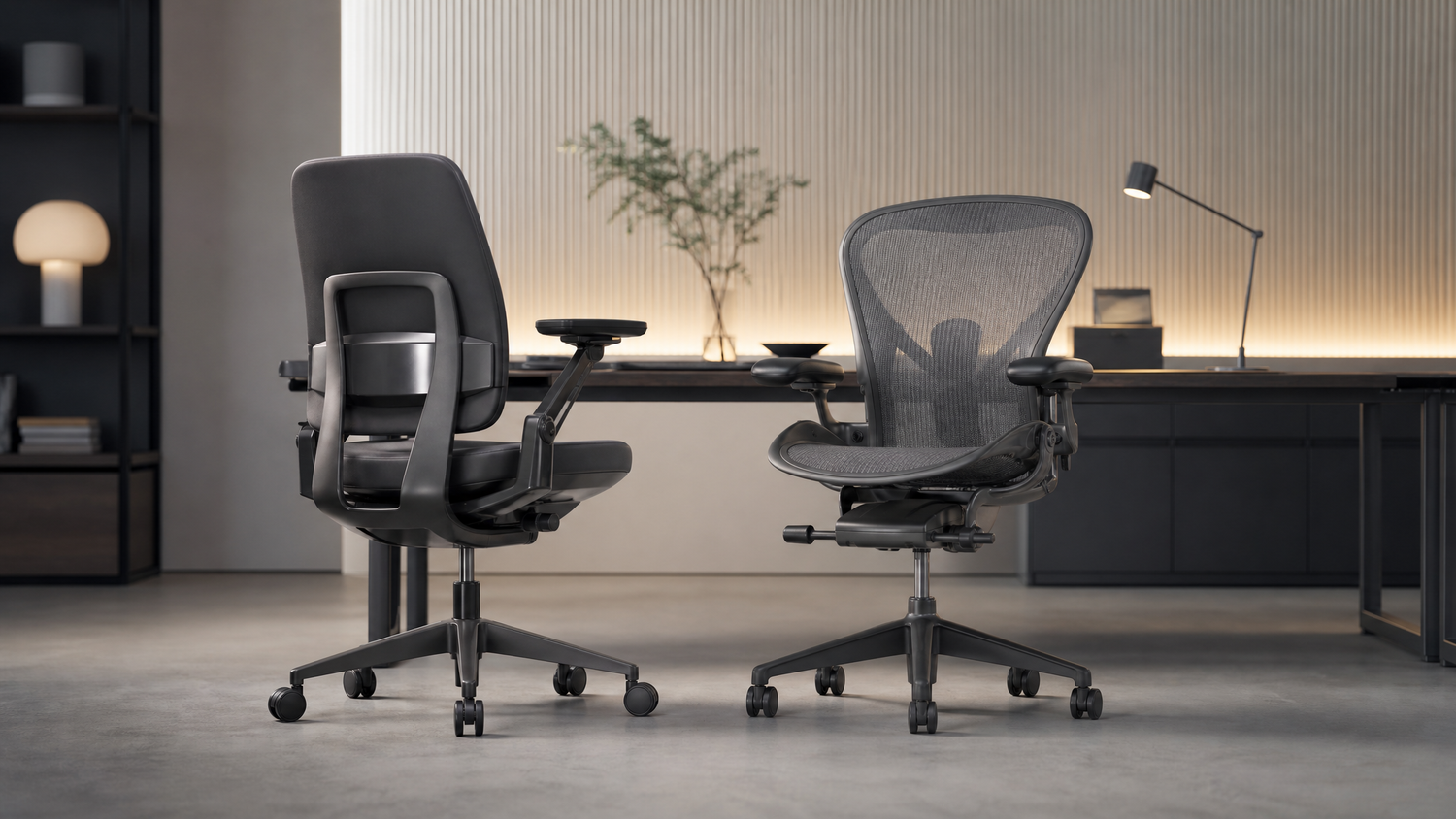
Decision Summary: LiberNovo Omni vs. Herman Miller Aeron
The BTOD review dropped a surprising claim: the LiberNovo Omni is more comfortable than the Herman Miller Aeron, Embody, Fern, and Leap. At $1,099, the Omni also costs less than chairs from Herman Miller—a pairing that immediately catches your attention. The trade-off? That comfort edge comes wrapped in a chair that reviewers describe as sometimes wobbly, with a seat that can feel too spongy and a back that doesn’t lock into a fully rigid position.
If you’re weighing high-tech adjustability against long-term stability, the decision isn’t as simple as the comfort headline suggests. The Omni’s electronic lumbar, motorized recline presets, and massage mode are genuinely different from the Aeron’s manual-only frame. But the wobble in the headrest and armrests, along with an armrest height that can’t go quite low enough, may matter more in daily use than a one-time comfort rating.
Comfort Face-Off: What the Reviews Say
BTOD’s direct comparison landed on the Omni as the most comfortable chair they’d tested, beating the Aeron and several other high-end models. The seat foam and the electronic lumbar are the two features most often credited for that ranking. The cushion uses cold-cured foam that feels plush right away, and the lumbar moves into place with a motor—no reaching back to twist a knob.
But comfort isn’t a single number. PCMag noted that the same seat foam can feel too soft, almost spongy, and may not provide enough spinal support for some sitters. The backrest itself has a wiggle that you notice when you lean into it, and upper back support can feel awkward, as if the chair is pushing in the wrong spot. PCGamesN highlighted the electronic lumbar and the two recline presets—Spine Flow and Deep Focus—as real contributors to a feeling of tailored support, but also pointed out that the headrest and armrests wobble conspicuously. One reviewer described the armrest movement as if it’s never fully locked, which can be distracting when you’re trying to work.
A few hours in, the Omni’s comfort narrative splits: you may love the way the lumbar cradles your back and the ease of switching recline postures, or you may find yourself missing the firm, planted feel of a chair like the Aeron. The Omni’s comfort is expressive, but it asks you to accept a certain amount of mechanical looseness.
Features and Adjustability: Where the Omni Stands Out
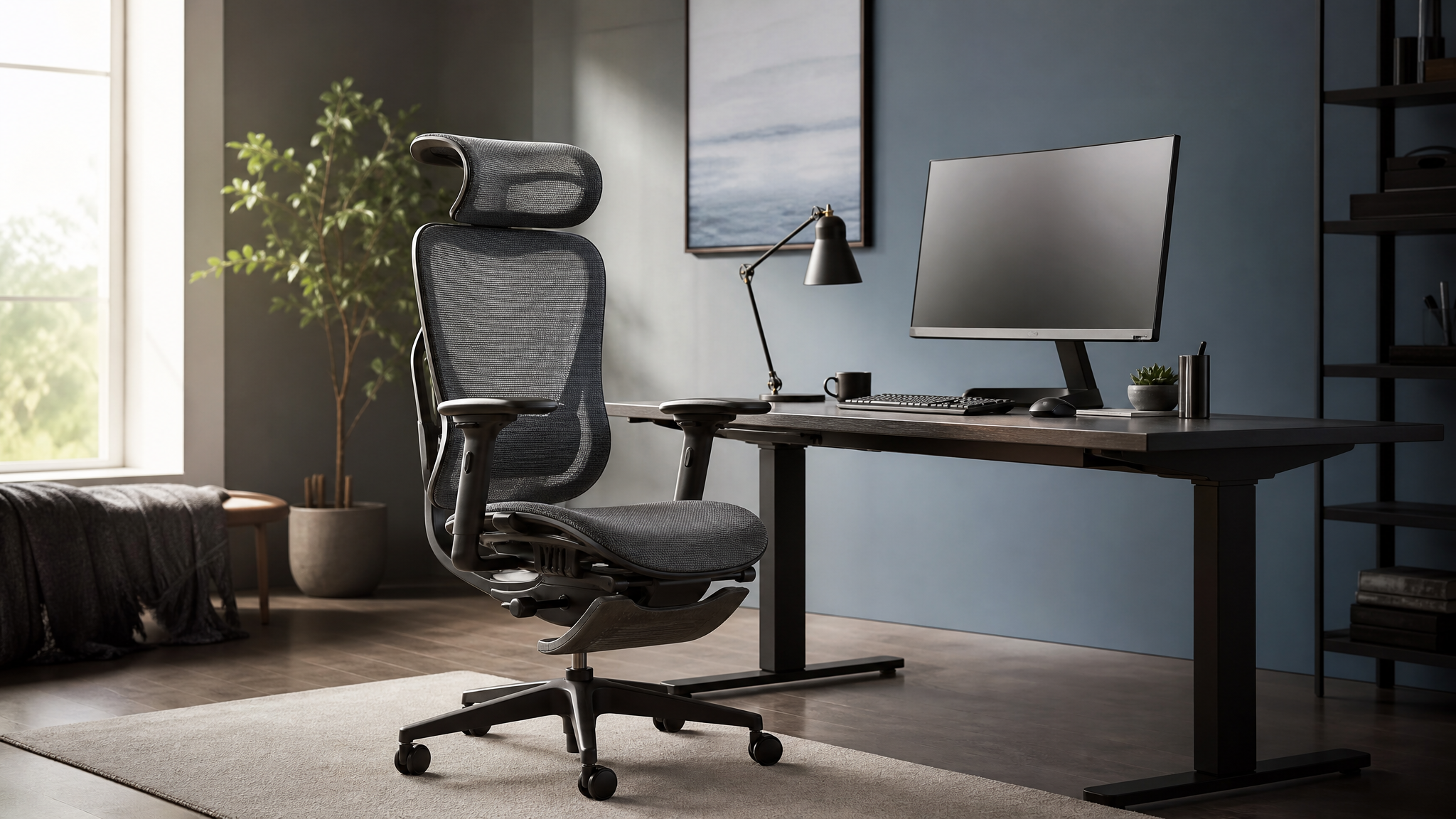
The Omni’s party trick is its electronic lumbar support. It moves up and down, in and out, and even includes a massage mode that vibrates. Two recline presets—Spine Flow and Deep Focus—let you tilt the chair to fixed angles with a button press. A cold-cured foam seat, dynamic armrests that pivot and slide, and an optional footrest round out a package that feels like a departure from the Aeron’s strictly manual dials and levers.
That motorized convenience comes with some accidental triggers. The OmniStretch function, which reclines the chair fully, can activate if you brush against the wrong spot on the remote. The armrests, too, have a habit of sliding out of place when you don’t want them to, because the adjustment mechanism isn’t as firm as it should be. PCMag reported that the armrest height cannot go lower than roughly one inch above where many users would prefer, which can force your shoulders up if you’re on the shorter side. The armrest width adjustment is similar in design to the Herman Miller Embody, but the Embody’s arms lock down with a certainty the Omni lacks.
The headrest wobble is another point of friction. You can position it, but it never feels anchored. For a chair that leans so heavily on its electronic features, the physical instability in the parts you touch most often creates a dissonance. Still, the ability to dial in lumbar support without reaching behind you, and to switch recline modes mid-task, is genuinely useful—especially if you alternate between focused work and relaxed reading.
Price and Value: How the Omni Stacks Up
The Omni’s price story is unusual. Early Kickstarter backers paid $648, and the pre-order price was $650. A launch discount runs through October 2025 at $850, after which the chair settles at its full retail of $1,099. That’s the number that matters for most buyers. At $1,099, the Omni is priced lower than Herman Miller chairs, including the Aeron, according to BTOD’s analysis. The value proposition is clear: you get motorized lumbar, a massage mode, and electronic recline presets for less than you’d pay for a classic manual chair.
That lower price, however, comes with the build-quality concerns already described. The Aeron’s pricing isn’t disclosed in the sources, but it’s a known premium product. The Omni’s appeal is that it puts advanced adjustability within reach of a budget that might otherwise buy a mid-range chair. The question is whether the electronics and the initial comfort will hold up over years of daily use. The Omni delivers a lot of features for the dollar, but the price difference doesn’t fully account for the difference in stability and long-term reputation.
Use-Case Fit: Which Chair Suits Your Body and Workflow?
LiberNovo says the Omni fits sitters from 5'2" to 6'3" and up to 300 lbs. The seat height adjustment, however, has a practical lower limit that may leave users around 5'4" or shorter with their feet not quite flat on the floor. PCMag flagged this as a pain point—the cylinder simply doesn’t go low enough for some. If you’re on the lower end of the height range, you might need a footrest to compensate.
The Omni rewards someone who likes to shift positions often. The electronic recline presets and lumbar adjustments make it easy to toggle between an upright typing posture and a reclined reading or thinking stance. If you sit still for long stretches and want a chair that feels like a solid, unmoving platform, the Omni’s slight wobble and the loose armrests may become irritating. The chair’s back doesn’t lock rigidly into place, and the spongy seat can feel like it’s absorbing your energy rather than supporting you. For users who prioritize a low, stable seat height and rock-solid armrests, the Aeron—known for its multiple size options and firm support—might be the safer bet, though the sources don’t detail its fit specifics.
Final Verdict: LiberNovo Omni vs. Herman Miller Aeron
The Omni makes a compelling case for a tech-forward office chair. BTOD’s comfort comparison puts it ahead of the Aeron, and the $1,099 price tag undercuts Herman Miller’s lineup. The electronic lumbar, massage mode, and recline presets are features you won’t find on the Aeron, and they genuinely change how you interact with the chair throughout the day. But the wobble in the headrest and armrests, the armrest height limitation, and the occasional accidental activation of the OmniStretch function are more than minor annoyances—they’re reminders that the Omni is still refining its build.
Choose the Omni if you’re excited by the idea of motorized comfort and are willing to live with a chair that sometimes feels a little loose under you. The Aeron, while not evaluated here in detail, represents the opposite: a proven, manually adjustable design that won’t surprise you with new sensations. If you can, try both chairs before committing. The Omni’s comfort advantage is real in the reviews, but your own tolerance for wobble and seat height will ultimately decide whether it’s a keeper.

Leave a comment
This site is protected by hCaptcha and the hCaptcha Privacy Policy and Terms of Service apply.